
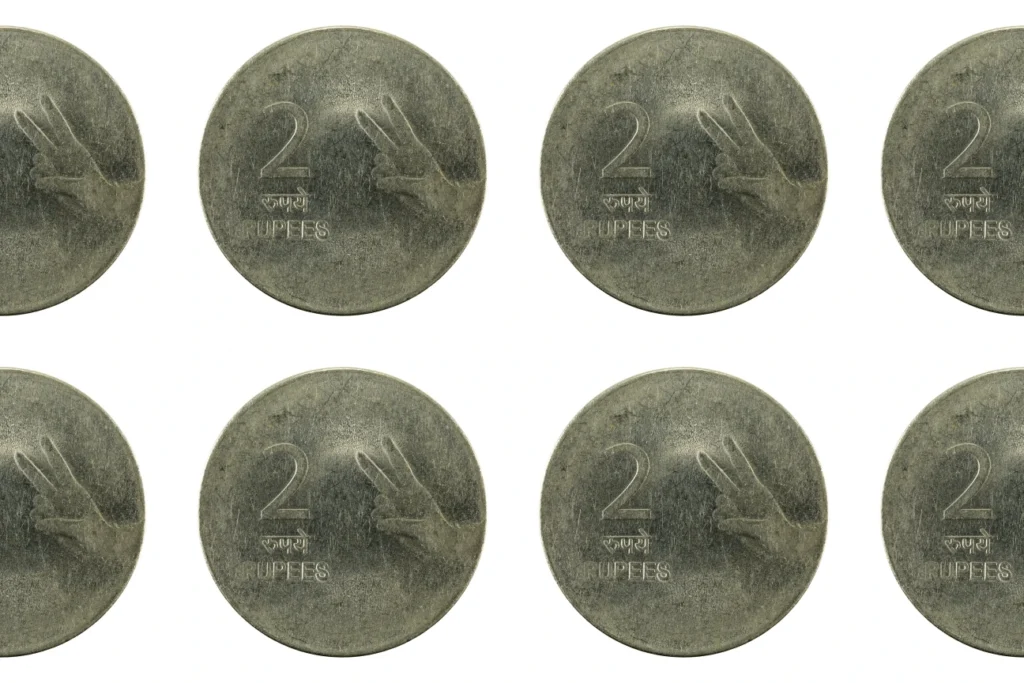
The Vanishing Coin in Your Pocket
If you’ve noticed the ₹2 coin slipping out of your daily life, you’re not alone. The disappearance of this once-ubiquitous coin is far more than just a quirk of spare change. It’s a symbol of how quickly India’s economy and spending habits are evolving. While the ₹2 coin is still legal tender, its absence from wallets and shop counters across the country captures a profound shift: India is outgrowing the need for small change as prices rise and digital payments dominate.
From Mint to Memory – A Short History of the ₹2 Coin
Introduced in 1982, the ₹2 coin was designed to bridge the gap between the familiar ₹1 coin and the more valuable ₹5 note. Its first versions were large, hexagonal, and made of aluminium-bronze, making them instantly recognisable to any Indian raised in the 1980s and 90s. As years passed, newer coins arrived in lighter stainless steel and classic round forms, frequently depicting national emblems such as the Lion Capital of Ashoka or commemorative motifs like Unity in Diversity.
- Weight: About 4.85 grams
- Material Evolution: Aluminium-bronze → Stainless steel
- Legal Status: Still legal tender, but rare in everyday transactions
These ongoing changes in design and composition reflected India’s growth, modernization, and changing sense of value.
The Real Reason the ₹2 Coin Lost Its Power: Inflation
Think back to the 1990s: a ₹2 coin could buy you a piping hot cup of chai, a city bus ticket, or a small snack. Fast-forward to 2025, and those same items easily cost ₹10 or more. This slow but relentless rise in prices – inflation – gradually squeezed the ₹2 coin out of relevance. When a coin no longer covers any meaningful purchase, people begin to ignore it.
Today, most ₹2 coins remain tucked away in car dashboards, donation boxes, or forgotten drawers. As they drop out of daily use, their “velocity” in the economy slows to nearly zero – a classic sign of currency obsolescence caused by rising prices.
From Coins to Clicks – The Digital Shift
Parallel to inflation, India’s digital payment revolution has turbocharged the ₹2 coin’s disappearance. UPI apps, QR codes, Paytm, Google Pay, and a host of other platforms are now the norm, even at roadside chai stalls. Why carry loose coins for “exact change” when a quick scan settles the bill to the last paisa?
Digitalization has had a powerful side effect. Behavioral economists point out that cashless payments change how people perceive money itself: you don’t feel the weight of your spending the way you do with coins and notes. You spend faster, you round up more, and you don’t notice the absence of small denominations like the ₹2 coin in your pocket.
What the ₹2 Coin Tells Us About How India Spends
The vanishing ₹2 coin is less about monetary mechanics and more about how our society is changing. Once, carrying change reflected caution and thrift. Today, convenience wins over counting coins – coins now feel old-fashioned, while digital wallets symbolise modern living.
Curiously, while everyday Indians have mostly abandoned the ₹2 coin, collectors and numismatists are paying a premium for special versions. Rare editions, such as certain 1994 Lion Capital coins or commemoratives like the 2001 Lok Nayak Jayaprakash Narayan coin, can fetch hundreds or even thousands of rupees from enthusiasts. For these aficionados, the ₹2 coin is gaining new value as a slice of cultural and monetary history.
Quick Facts about the ₹2 Coin
- 206 coins in 1 kg (≈ ₹412 value)
- Rarest version: 1994 Lion Capital with sharp relief
- Commemorative edition: 2001 Lok Nayak Jayaprakash Narayan
- Design: 1980s hexagonal vs. 2000s stainless steel round
- Most ₹2 coins can no longer buy a basic street snack
The Future of Small Coins in India
Given today’s inflation rates and the widespread adoption of cashless payments, the disappearance of the ₹2 coin may be just the beginning. The government continues to mint these coins to complete the currency spectrum, but Indians’ reliance on them is fading fast. Coins like ₹1 and ₹2 might soon exist only as keepsakes, much like the once-popular one-paisa coins or the old heavyweight ₹5 coins, which have also quietly exited daily life.
As India’s economy speeds up, people turn ever more to digital spending and less to the tactile certainty of cash and coins. This shift brings convenience and efficiency – yet also signals the end of an era where coins determined everyday interactions and habits.
More Than Small Change – A Cultural Shift
The story of the ₹2 coin’s disappearance says more about India than mere inflation or technology. It mirrors how modern India has redefined value, moving from carefully counting every rupee to seamlessly tapping every payment. It speaks to a nation ready to embrace innovation – yet at the same time, letting go of the simple charms and rituals that once defined our everyday transactions.
So the next time you stumble across a ₹2 coin, don’t dismiss it as mere spare change. Take a moment to appreciate its journey from the mint to your memory. It’s a tangible reminder of how India used to save, spend, and value its money – a tiny, fading artifact from the days when every rupee (and every coin) truly counted.
Moving Forward with Your Money
As cash gives way to clicks and as coins become collectibles, it’s more important than ever to be smart about how you manage your money – whether at home or abroad. That’s where financial partners like Matrix Forex come in. By helping you navigate the transition from coins to cashless, Matrix Forex ensures that your every rupee – whether digital or physical – works hard for you in this evolving economy.